Skin Health: Structure, Functions, and the Importance of Choosing the Right Skincare
Skin u2013 Our Largest Organ
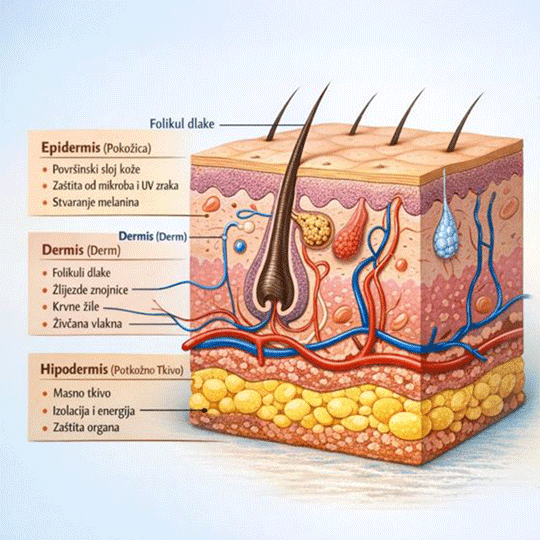
To understand the purpose and action of the cosmetic products we use, it is important to have a basic understanding of skin structure and the functions it performs in the human body. It is equally important to correctly identify and accurately determine one's skin type in order to select appropriate skincare products. In this context, it is useful to familiarise oneself with the meaning of certain terms frequently used in dermocosmetics. The skin is a large and dynamic organ that performs a range of vital functions important for the entire body. Its fundamental role is protective u2013 the skin represents the first line of defence against external influences, including pathogen penetration, ultraviolet radiation, and mechanical and chemical damage from the environment. Beyond its protective function, the skin is also a sensory organ and an important site for the synthesis and metabolism of proteins, lipids, and various signalling molecules. In this way, it is functionally connected to the immune, nervous, and endocrine systems. Due to constant exposure to external factors, the skin is more susceptible to damage and accelerated aging compared to other organs, which is particularly reflected in the appearance of facial skin, where the signs of aging are first observed. Although the skin undergoes numerous changes over the years, it remains metabolically active and capable of regeneration throughout life. The use of high-quality and properly selected cosmetic products can contribute to skin renewal, delay the appearance of aging signs, and mitigate the development of deeper wrinkles and other irregularities. Like most other organs, the skin tends to gradually thin over time. The aging process causes a progressive reduction in the thickness of the epidermal and dermal layers, primarily attributed to a decrease in the number of epidermal stem cells and the loss of dermal collagen, the most abundant protein in the human body. In cosmetic and dermatological contexts, the terms epidermis and dermis are frequently mentioned, so it is important to clarify their meaning. The skin consists of two basic layers: the superficial layer u2013 the epidermis, which is composed of four or five layers of different cells, and the deeper layer u2013 the dermis. The epidermis predominantly consists of cells, primarily keratinocytes, which are arranged in layers throughout the entire epidermis. The cells of the outermost epidermal layer, the stratum corneum, are called corneocytes and represent dead cells without a nucleus. During the process of keratinisation, cells from the deeper epidermal layers undergo differentiation that includes the synthesis of specialised structural proteins, secretion of lipids, and formation of a cell envelope from cross-linked proteins. In this process, the cells gradually lose their nucleus. In this way, the most superficial epidermal layer is formed, which is in direct interaction with the external environment and consists of flattened, metabolically inactive cells. Together with intercellular lipids, this layer forms a water-impermeable barrier. It is also known as the horny layer (stratum corneum) and, together with the deeper epidermal layers, performs the skin's crucial barrier function. The stratum corneum consists of approximately 15 to 20 layers of corneocytes containing filamentous keratin. It is often described using the "bricks and mortar" model, where corneocytes represent the "bricks" and the intercellular lipid complex represents the "mortar". The cellular component ensures the mechanical strength of the skin, while the intercellular lipid complex is essential for preventing transepidermal water loss and maintaining optimal skin hydration. The composition and thickness of the epidermis and dermis vary depending on the anatomical region. The epidermis is thinnest on the eyelids, where it measures approximately 0.04 mm, while it is thickest on the palms and soles, with a thickness of up to approximately 1.6 mm. The dermis gives the skin its strength and elasticity. It is a relatively acellular layer that primarily consists of extracellular matrix proteins, particularly collagen fibres, which constitute approximately 75% of the dry weight of the dermis. The main cells of the dermis are fibroblasts, responsible for the synthesis of collagen, elastin, and hyaluronic acid. The dermis also contains blood vessels that supply nutrients to both the epidermis and dermis.
Skin Types and Choosing the Right Skincare
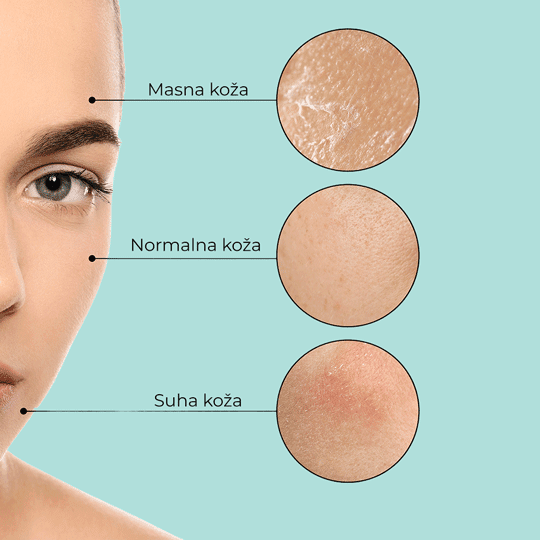
We distinguish four basic skin types: normal, dry, oily, and combination skin. They differ from one another primarily according to the amount of lipids present on the skin's surface. Skin type is largely influenced by genetics, while various external factors can cause temporary skin conditions. It is important to emphasise that any skin type can be dehydrated, which should not be confused with dry skin type. Dry skin is characterised by a lack of lipids, which disrupts the protective barrier and reduces the ability to retain moisture. Symptoms can range from a mild sensation of tightness to pronounced dryness, roughness, and flaking. This skin type requires cosmetics rich in nourishing ingredients and quality serums for moisture replenishment. Oily skin is marked by increased sebum production, an oily sheen, and enlarged pores. Excessive sebum secretion can lead to follicle blockage and the development of blackheads or acne. This skin type requires the use of non-comedogenic cosmetic products with a lightweight, hydrating texture that will not further burden the skin. Products for oily skin care should also contain active ingredients with antibacterial, anti-inflammatory, and soothing properties. Combination skin is characterised by increased sebum secretion in the forehead, nose, and chin area (T-zone), while the cheeks are normal or dry. Enlarged pores are also frequently present, particularly in the T-zone area. This skin type benefits from hydrating serums or gels, followed by the application of lighter creams. Since collagen is a natural humectant with pronounced hydrating properties, its application in the form of a serum or gel is suitable for all skin types and represents an excellent first step in a skincare routine.